Vikram-1: India's First Private Orbital Rocket Just Reached Space — Here's What It Means
A New Chapter in India's Space Story
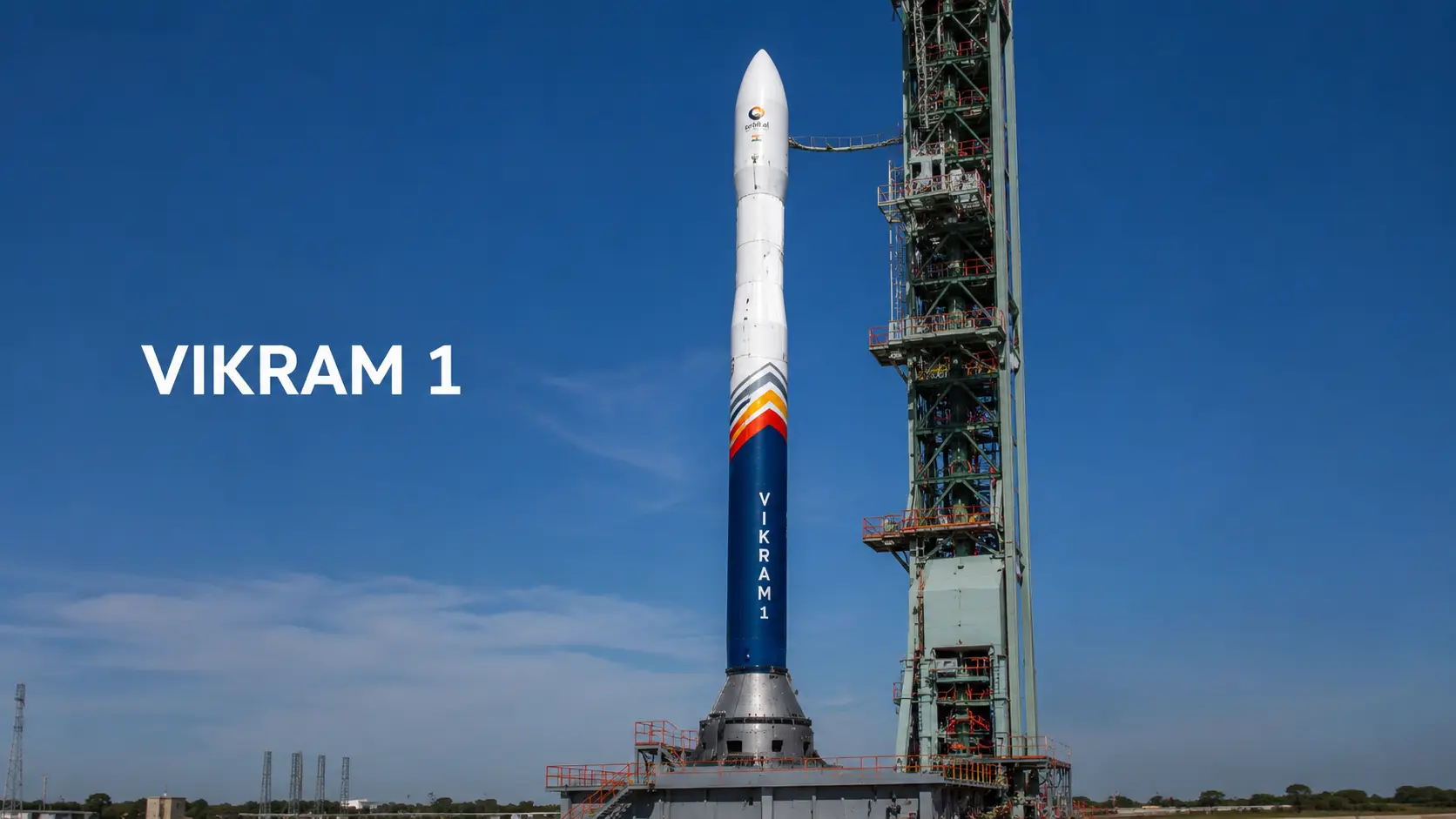
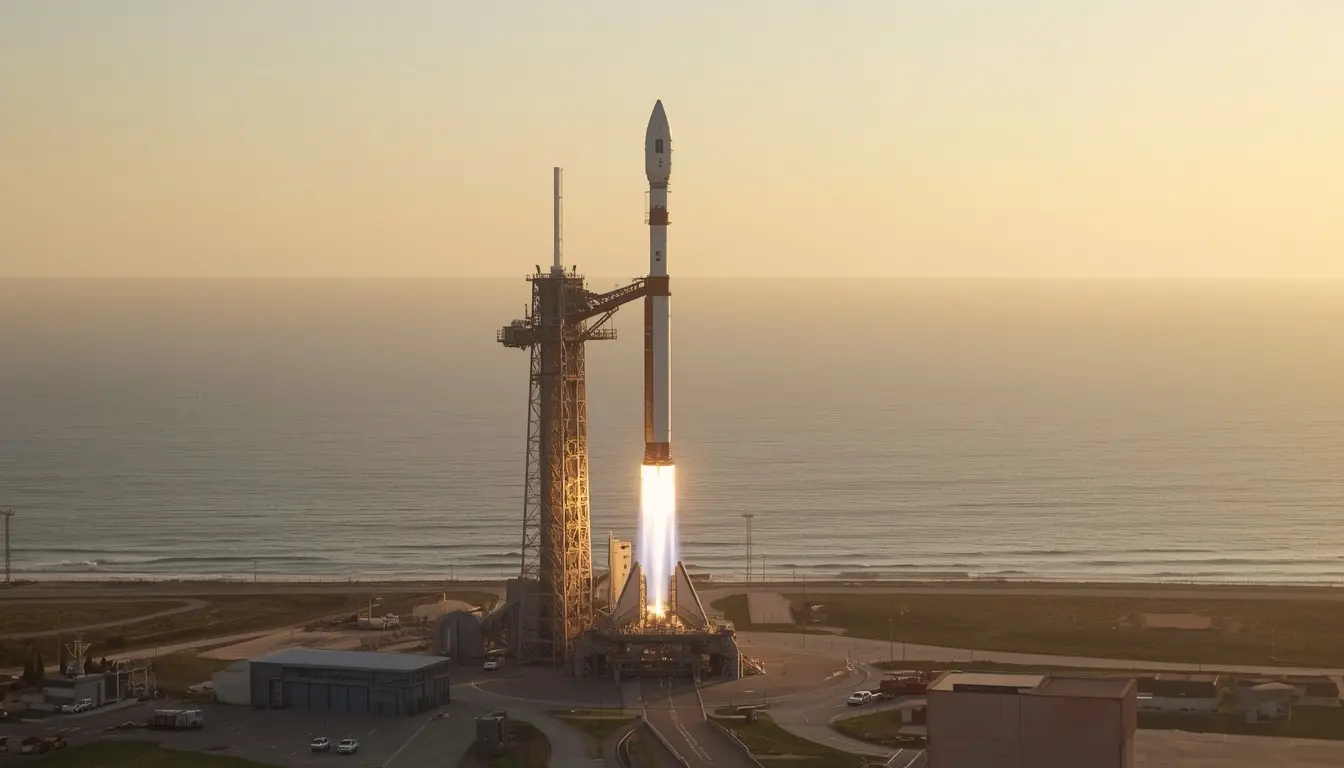
On July 18, 2026, at 11:30 AM IST, a 22-metre-tall rocket lifted off from the First Launch Pad at the Satish Dhawan Space Centre in Sriharikota. It wasn't built by ISRO. It was built by Skyroot Aerospace, a Hyderabad-based startup — and its success made India the third country in the world, after the United States and China, to have a private company capable of reaching orbit on its own rocket.
The rocket is called Vikram-1. The mission was named "Aagaman" — Sanskrit for arrival.
Quick answer: Vikram-1 is Skyroot Aerospace's four-stage orbital rocket, and it successfully completed its first flight on July 18, 2026, carrying four satellite/technology payloads into a 450 km, 60-degree inclination orbit.
- India's first private orbital-class rocket launch
- Carried Grahaa Space's SOLARAS S3, Cosmoserve Space's Embrace, a DCUBED tech demo, and Skyroot's own SCOPE satellite
- Also carried a symbolic 18-karat gold micro-rocket and a handwritten postcard from PM Modi
What Exactly Is Vikram-1?
Vikram-1 is an expendable, four-stage orbital small-lift launch vehicle — the first of its kind developed entirely by a private Indian company. Its first three stages burn solid fuel; the fourth is a liquid-fuelled Orbital Adjustment Module, which lets it fine-tune a satellite's final position in orbit with much greater precision than a purely solid-fuel rocket could manage.
The rocket is named after Vikram Sarabhai, widely regarded as the father of India's space programme — the same namesake behind Skyroot's earlier sub-orbital demonstrator, Vikram-S, which flew in November 2022 as India's first privately built rocket to reach space.
Where Vikram-S proved a private Indian company could build and fly a rocket, Vikram-1 proves one can deliver a real payload into a stable Earth orbit — the difference between a test flight and an actual, revenue-generating launch service.
Founded in 2018 by Pawan Kumar Chandana and Naga Bharath Daka, both IIT alumni and former ISRO scientists, Skyroot describes Vikram-1's role in simple terms: a "cab to space" — a rocket that satellite companies and research institutions can book to send payloads to a specific, custom orbit, rather than waiting to share a ride on a much larger vehicle.
Mission Aagaman: What Actually Flew
The July 18 test flight carried four real payloads into a Low Earth Orbit roughly 450 km up, inclined at 60 degrees:
| Payload | Provider | What it does |
|---|---|---|
| SOLARAS S3 | Grahaa Space | Satellite payload |
| Embrace | Cosmoserve Space | In-orbit robotic arm for capturing orbital debris |
| Technology demonstration | DCUBED | In-orbit tech demo |
| SCOPE | Skyroot Aerospace | Skyroot's own in-house satellite |
Alongside the technical payloads, the rocket also carried two symbolic items that made headlines on their own: a floral-shaped artwork called "Cosmic Bloom", and an 18-karat gold micro-rocket engraved with microscopic sculptures of three of India's most celebrated scientists — C.V. Raman, Vikram Sarabhai, and A.P.J. Abdul Kalam — each smaller than a grain of rice. A handwritten postcard from Prime Minister Narendra Modi, bearing the words "Vande Mataram," also went into orbit aboard the rocket.
Vikram-1 stands roughly 22-24 metres tall and is built with a carbon-fibre composite structure and 3D-printed engines — technology choices Skyroot has leaned on since Vikram-S, aimed at cutting both weight and manufacturing time compared to traditional metal rocket bodies.
Inside the Four Stages
Each of Vikram-1's stages has its own name and job:
| Stage | Name | Propellant | Approx. thrust |
|---|---|---|---|
| 1 | Kalam-1200 | Solid | ~1,000-1,200 kN |
| 2 | Kalam-250 | Solid, with flex-nozzle steering | ~250 kN |
| 3 | Kalam-100 | Solid | ~100 kN |
| 4 | Raman-1 (cluster of 4) | Liquid (MMH/NTO) | ~3.4 kN combined |
The first three stages, named after former President and rocket scientist A.P.J. Abdul Kalam, are solid-fuel motors — simple to build and store, but unable to be throttled or shut off once lit. The real precision comes from the fourth stage: a cluster of four Raman-1 engines, named after Nobel laureate C.V. Raman, burning a hypergolic propellant pair that can be restarted and throttled mid-flight. This liquid upper stage — sometimes called the Orbital Adjustment Module — is what lets Vikram-1 fine-tune a satellite's exact orbital position, something a purely solid-fuel rocket can't do.

Why This Launch Matters
India opened its space sector to private companies back in 2020. Since then, several startups have built hardware, but actually reaching orbit on a self-built rocket is a different bar entirely — one only a handful of nations have ever cleared through a private company, rather than a national space agency. Vikram-1's successful flight puts India in that small group.
For the broader Indian space industry, it also validates the "cab to space" model Skyroot has been pitching: instead of every satellite operator negotiating a slot on a large national rocket, a company could book a dedicated or semi-dedicated Vikram-1 flight sized to their specific payload and orbit needs — a model that has driven much of the small-launch industry's growth globally over the past decade.
Will Vikram-1's Payloads Show Up on a Satellite Tracker?
Not immediately. Newly launched objects aren't visible on trackers like OrbitMap the moment they reach orbit — they first need to be catalogued by the US Space Force's 18th Space Defense Squadron, which assigns each tracked object a NORAD catalog number and publishes orbital element data. That process typically takes anywhere from a few days to a couple of weeks after launch.
Once SOLARAS S3, Embrace, the DCUBED payload, and SCOPE each receive their catalog numbers, their real-time positions will become available through the same public orbital-data feeds that power OrbitMap's tracker.
What's Next: Vikram-1U and Vikram-II
Skyroot isn't stopping at Vikram-1. Two follow-on vehicles are already on the roadmap:
- Vikram-1U — an upgraded version fitted with solid rocket boosters to lift payload capacity to around 550 kg to LEO, targeted for early 2027.
- Vikram-II — a larger vehicle powered by a new cryogenic engine (Dhawan-II, burning LOX/LNG), aiming for roughly 900 kg to LEO or 600 kg to Sun-Synchronous Orbit, also planned for 2027.
The Bigger Picture
Skyroot's journey from a 2018 startup to India's first private company to reach orbit has moved fast: a first sounding-rocket engine test in 2020, the sub-orbital Vikram-S flight in 2022, and now a full orbital launch in 2026 — backed along the way by ISRO, IN-SPACe, and investors including Singapore's GIC and Temasek, pushing Skyroot's valuation past $1 billion. With Vikram-1 proven, the next question for the Indian space industry is how quickly that "cab to space" model turns into a regular, bookable launch cadence — and whether Vikram-1U and Vikram-II arrive on schedule to serve heavier satellites.
See it live, right now
Launch the interactive 3D tracker and watch real satellites orbit Earth in real time.
Launch the Tracker →